What actually makes a post sound automated
People rarely notice that a post was scheduled. They notice that it was written by someone who was not paying attention. Those are different problems, and only one of them has anything to do with automation.
A post reads as robotic when it could have been published by any business in your industry, in any week of the year. No detail that only you would know. No opinion anyone could disagree with. Nothing that happened. The giveaway is not the schedule behind it, it is the absence of a person in it.
Which means the question is never whether to automate. It is which part you hand over.
Automate the delivery, not the judgment
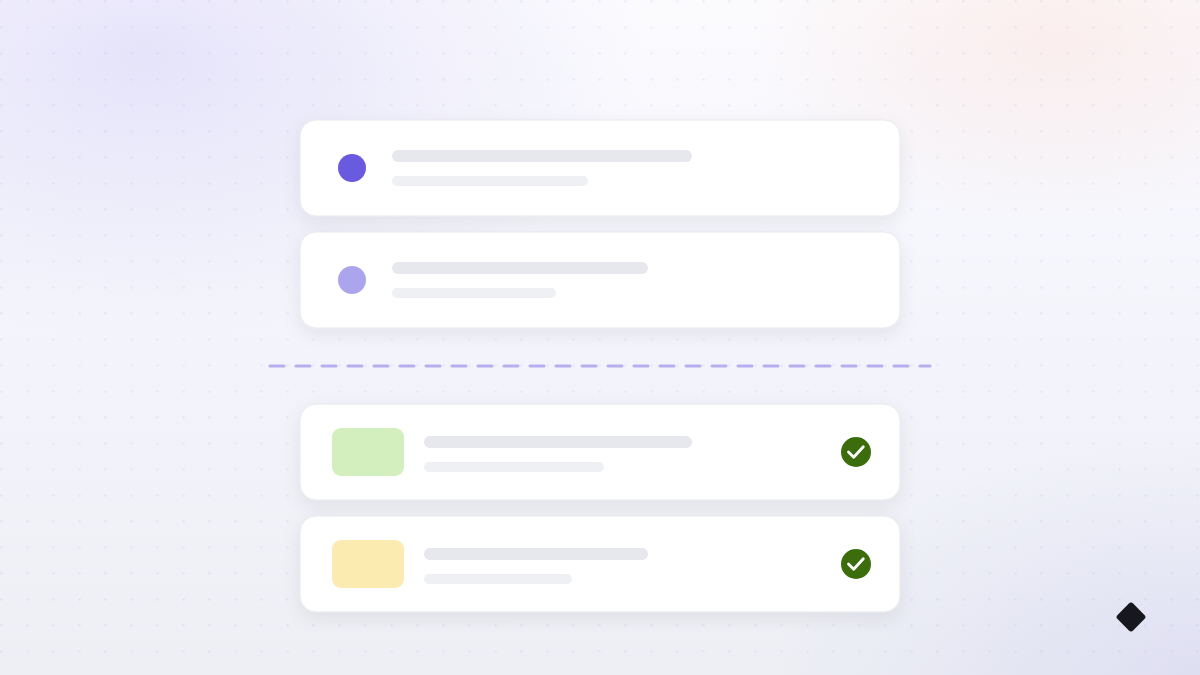
Posting breaks into four layers, and they are not equally safe to hand over:
- Deciding what to say. What is worth telling people this week.
- Writing it. Turning that into words in your voice.
- Fitting each platform. Length, crop, hashtags, first line.
- Sending it. The right account, the right time.
Layers three and four are clerical. They follow rules, they reward consistency, and no customer has ever been moved by how well you resized an image. Hand them over completely.
Layer one is judgment, and it draws on things no tool has access to: the job you finished on Thursday, the question three customers asked this month, the supplier who let you down. Keep it.
Layer two sits in between, and that is where most of the argument really lives. A draft can save you the blank page. A draft that also chose the subject will sound like nobody.
The layer to keep for yourself
Keeping layer one is cheaper than it sounds. It is not a strategy session. It is a few lines a week, written for yourself, about what is actually going on.
A roofer might write: finished the Alvarez re-roof, storm season starting, two slots open in June. A salon might write: new colourist started, everyone asking about the summer bob, Tuesdays are quiet. Thirty seconds each, and every post that week has somewhere true to start from.
This is also where a prompt list earns its keep. It shortens the search for a subject without choosing the subject for you.
Where a draft helps, and where it flattens
Given a real subject, a draft is a genuine time saver. It handles the shape of the thing, the opening line, the awkward middle, the call to action at the end. You arrive at editing rather than at a blank screen.
Given no subject, the same draft has to invent one, and it will reach for whatever is most typical for a business like yours. That is the flattening everyone is worried about, and it happens at the layer above the writing, not in the writing itself.
The practical test takes ten seconds. Read the draft and ask whether a competitor down the road could post it word for word. If they could, the subject was too generic, and no amount of rewriting will fix that. Go back a layer.
Same idea, different rooms
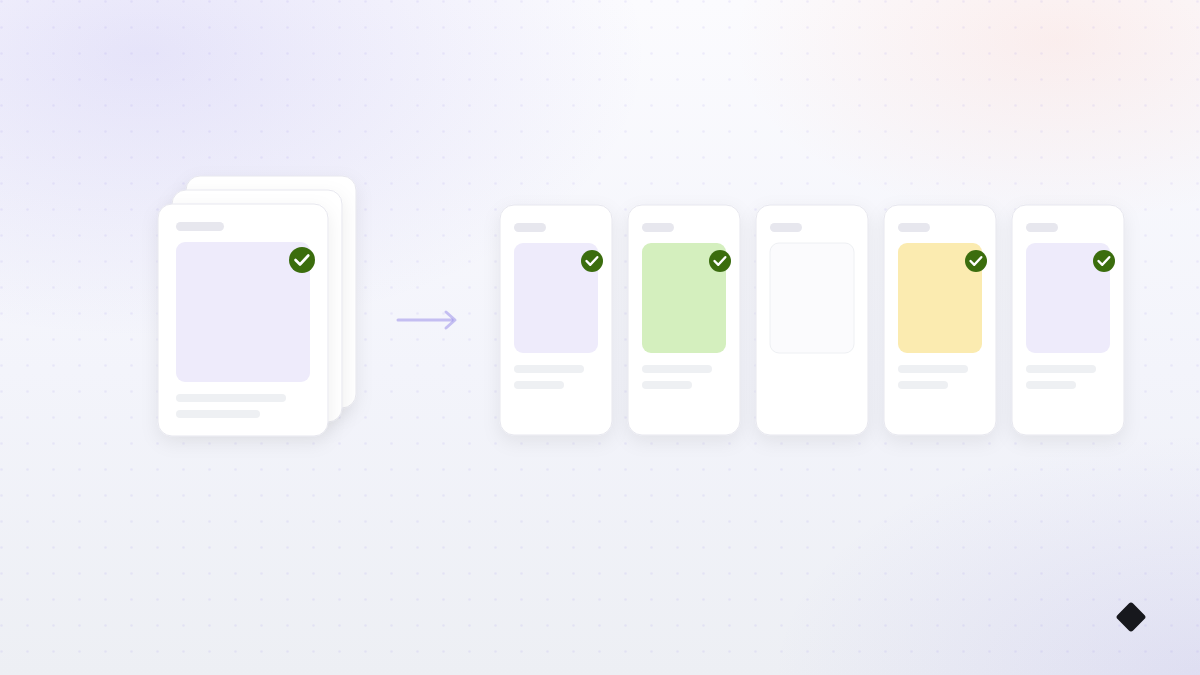
One idea should reach every platform, and it should arrive dressed for the room. The same finished kitchen is a photo with a short caption on Instagram, a longer story about the problem you solved on Facebook, and a note about the supply issue you worked around on LinkedIn.
Posting identical text everywhere is the most common way to look automated, and it is the easiest to fix. Adapting length and opening line per platform is clerical work, which puts it squarely in the layers you should be handing over.
Five tells that give a post away
- No proper nouns. No street, no product, no name. Real posts are full of them.
- Perfectly even cadence. Same time, same length, same shape, forever. Real weeks are lumpier.
- Answers nobody asked for. Advice with no question behind it reads as filler.
- Stock phrasing. "Elevate your space", "we are passionate about". Nobody says these out loud.
- Silence in the comments. A scheduled post that nobody answers is a broadcast, and readers can feel the difference.
Three rules that keep your voice yours
Write one sentence yourself. Even in a drafted post, replace a line with something only you would say. One specific detail carries a whole caption.
Keep a short do-not-say list. Three or four phrases you would never use in person. Apply it to every draft. Most brand voice guides are twelve pages nobody reads; this one fits on a card and gets used.
Answer your own comments. Scheduling handles publishing. Replying is the part that proves a person is here, and it takes a few minutes a week.
What the review step is actually for
Review is often described as quality control, which undersells it. Catching a typo is the least of what happens in that minute.
The real work is the small correction: the phrase that is close to how you talk without quite being it, the claim that is a shade stronger than you would make face to face, the post that no longer matches a week that changed on Wednesday. Those edits are what keep an account sounding like a business rather than a feed.
It costs a few minutes a week, and it is the whole reason the rest can be handed over safely. Automation without a review step is not efficiency, it is publishing with your eyes closed.
How Postd draws the line
Everything above is a policy, and policies need something to enforce them. This one is built into how Postd works.
It learns your business from your own website, so drafts start from your services and your language rather than from a generic template. It adapts each post per platform and handles the scheduling and publishing.
What it never does is decide on its own that something should go out. Every post waits for you, and nothing publishes without your approval. The How it works page walks the whole loop.
Your next step: write four lines about your week, run one batching session against them, and replace one sentence in each post with something only you would say.