
The honest answer
Most small businesses do not need to post more. They need to post more consistently. Three good posts every week, for a year, will do more for you than thirty posts in January and silence until June.
So the real question is not "what number do the platforms want." It is "what number can I sustain when the business gets busy." Everything below starts from that.
Starting points by platform
These are commonly recommended starting points for small businesses as of 2026, drawn from current platform guides. Treat them as a place to begin testing, not as rules, and remember that one platform done well beats four done halfway:
- Instagram: around three to four feed posts a week, plus Stories on the days in between if you enjoy them. Stories are low-pressure and disappear in a day.
- Facebook: three to five posts a week for a local page. Community posts and event updates tend to carry further than pure promotions.
- Google Business Profile: one or two updates a week. These support the search listing people see when they look you up, so freshness matters more than volume.
- LinkedIn: two to three posts a week if you sell to other businesses. Fewer, more substantial posts do better here than daily filler.
- TikTok: about three videos a week is a workable baseline, but only if being on camera fits you. It is the most time-hungry platform on this list.
If those numbers look impossible this month, halve them and keep the halved schedule every single week. A smaller number you keep is worth more than a bigger number you abandon.
Why a steady rhythm beats bursts
Two things reward steadiness. Platforms tend to give accounts that post predictably a fairer shot at reach than accounts that vanish and reappear. And customers quietly notice: an account that posted this week reads as an open business, while one that stopped three months ago raises a small doubt at exactly the wrong moment.
Bursts also burn you out. The month you post daily is usually followed by the quarter you post nothing. A rhythm you barely notice keeping is the goal, and that idea is the heart of the simple plan we laid out for small businesses.
A simple weekly schedule
Here is a schedule that fits the starting points above without taking over your week:
- Monday: a helpful tip on Instagram and Facebook.
- Wednesday: proof of your work on Instagram and Facebook, and the same update posted to your Google Business Profile.
- Friday: something human: the team, the space, a behind-the-scenes moment.
- Every other Saturday: a clear, friendly offer with a way to book or buy.
That is three to four posts a week, two platforms plus your Google listing, and one planning session to set it all up. Adjust the days to your trade: a restaurant might move the offer to Thursday before the weekend rush, a B2B service might swap Saturday for a Tuesday LinkedIn post.
Match the number to your capacity
The right frequency is a capacity decision, not an ambition decision. Be honest about three things: how much time you have weekly, who is actually doing the posting, and what happens during your busy season. If the answer to the last one is "everything stops," plan for your busy-season capacity, not your quiet-season capacity.
This is also the strongest argument for batching and tools: when the writing and scheduling are handled in one sitting, the weekly cost of staying consistent drops to minutes, and we cover that habit in how to stay consistent without spending hours.
Signs you are posting too little or too much
Watch for these once a month rather than daily:
- Too little: customers say "I did not know you were open" or "I did not know you did that." Your last post is more than two weeks old. Reach declines month over month even though nothing else changed.
- Too much: quality is slipping and you can feel it. Posts repeat themselves within the same week. Engagement per post keeps dropping while your effort keeps rising, or you dread the schedule you built.
Notice that both lists are about your business and your audience, not a universal number. The same three posts a week can be too few for a busy cafe and plenty for a tax office.
How to adjust without breaking the habit
Change frequency one step at a time, and give each change a month before judging it. Add one post a week, or move one, and keep everything else fixed. If reach and conversations hold steady or improve, keep the change. If quality slips, step back down without guilt.
Whatever you change, protect the habit itself: the same planning session, the same review moment, the same days. Frequency is a dial. The rhythm is the machine.
How Postd keeps the rhythm going
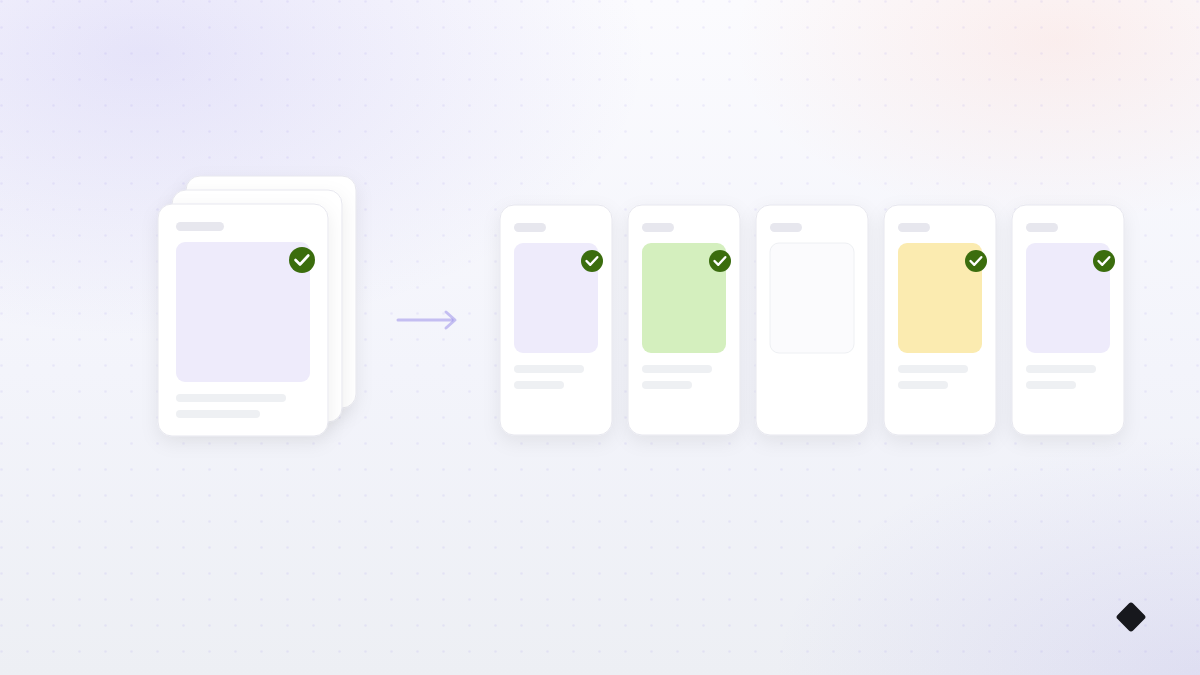
The hard part of any posting schedule is not choosing the number. It is producing the posts every week, forever. Postd takes that recurring part: it learns your business from your website, prepares a week of on-brand posts across your platforms, and lays them on the calendar at your chosen rhythm. You review, edit what you want, and approve. Nothing publishes without your approval.
Your next step: pick a number you can keep on your busiest week, write the schedule down, and hold it for one month before you touch the dial. You can see how the weekly flow works in practice on the How it works page.