Repurposing is not reposting
Most advice on repurposing means reformatting: take the post, crop it square, trim it to fifteen seconds, and push it out again. That is redistribution. It fills slots and it teaches your audience that following you twice shows them the same thing twice.
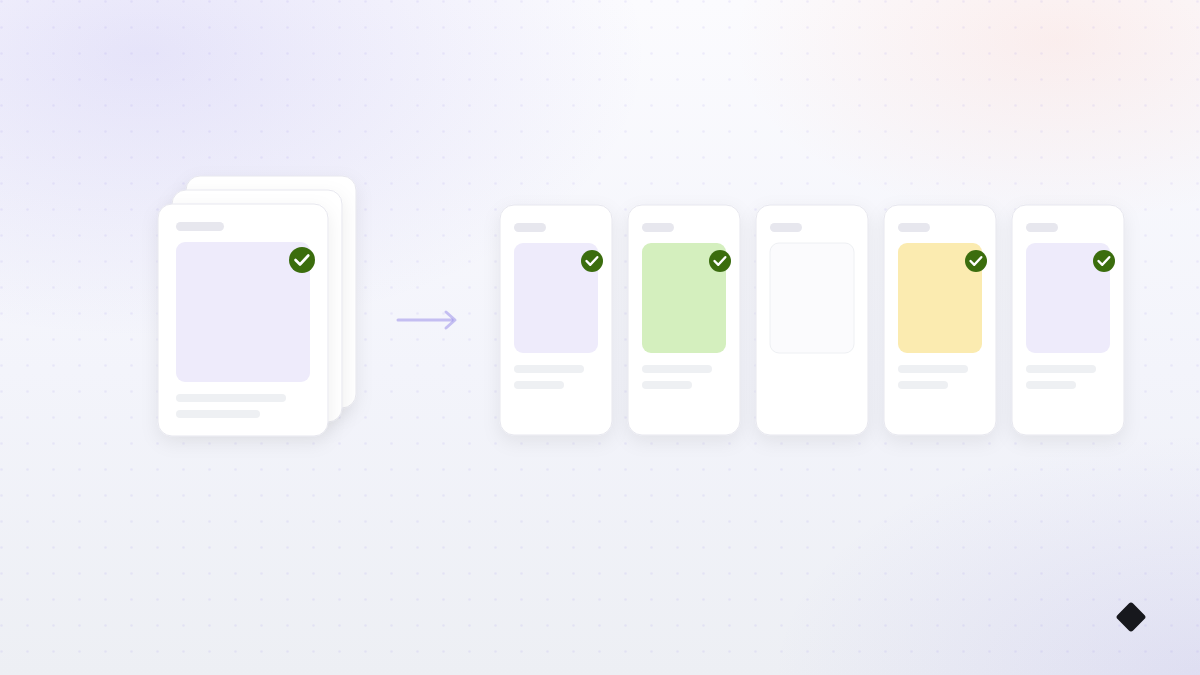
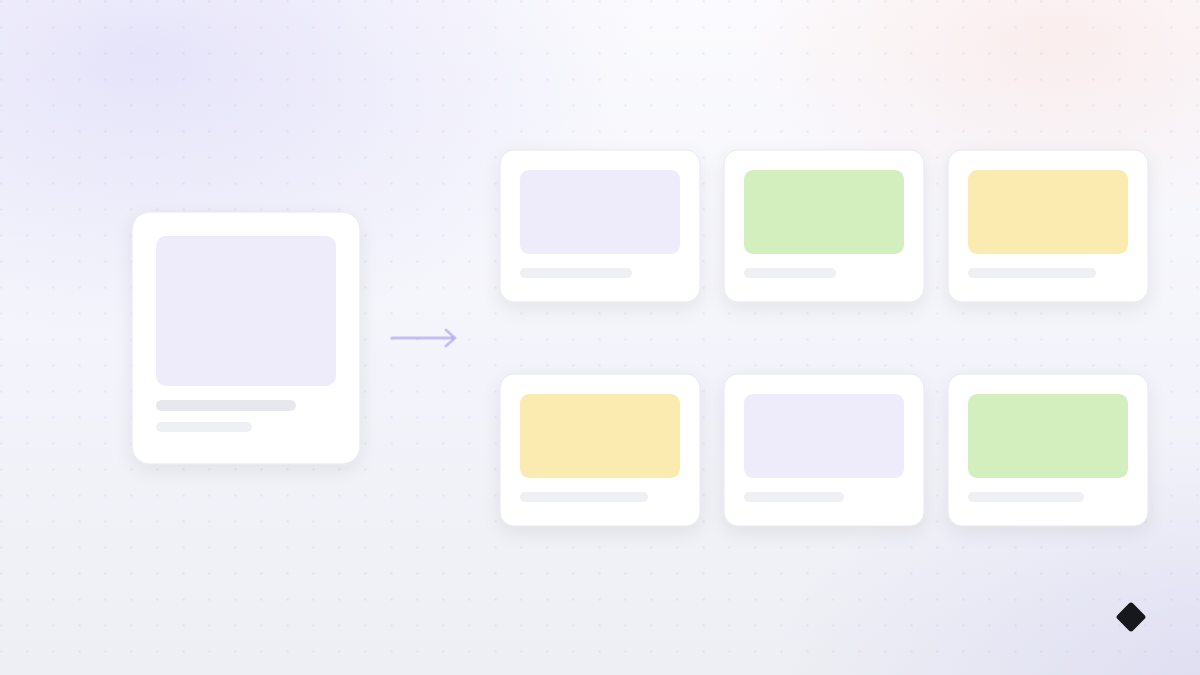
Real repurposing works in the other direction. Instead of taking one idea to six places, it takes one piece of work and finds the six separate ideas that were already inside it. Same raw material, genuinely different posts.
The shift matters because it removes the thing owners actually run out of, which is subjects rather than time.
What is already inside one piece of work
Any finished job carries a story with several distinct moments, and each one interests a different reader. The before state interests someone with the same problem right now. The decision interests someone comparing options. The detail interests the people who care about craft. The result interests everyone.
Nobody needs all of it in one post, and compressing it into one is why so many captions read as a summary of nothing in particular.
Six angles hiding in a single job
- The before. What the customer was living with, and why it bothered them.
- The decision. A choice you made and the reason you made it that way.
- The problem. Something unexpected, and how you handled it.
- The detail. One close-up most people would walk past.
- The result. The finished thing, shown properly.
- The reaction. What the customer said when they saw it.
Six angles from one job. At four posts a week, that is a week and a half of material from work you were doing anyway.
One job, worked all the way through
A florist builds an installation for a small wedding. One event, six posts, no extra production beyond a phone.
The before is the empty barn with the bare beams. The decision is choosing seasonal stems over imported ones and what that changed. The problem is the heat wave that week and how the arrangements were kept alive. The detail is a single close-up of the hanging mechanism. The result is the room, finished, an hour before guests arrived. The reaction is the message the couple sent afterwards, shared with permission.
Each post stands on its own and none of them repeats another. A reader who sees all six gets a story rather than a slideshow.
Same angle, different formats
Once an angle is chosen, the format question is easy and clerical. A photo with a short caption suits the detail and the result. A short series of images suits the before and the decision. Plain text with no image at all often suits the problem, because the interesting part is the thinking.
Choose the angle first and the format second. Doing it the other way round is how you end up looking for something to say that fits a video you already made.
What should never be stretched
Some material genuinely gives one post, and pushing it further shows. A routine job with nothing distinctive about it is one post. An announcement is one post. A thank-you is one post.
The test is whether each angle would still interest someone who missed the others. If the second post only makes sense as a follow-up to the first, you have split one idea rather than found two.
Capturing while you work
This whole approach depends on having the raw material, and the raw material has to be gathered while the work happens. Nobody can photograph the before once the job is finished.
The habit is small: a photo at the start, one at any moment something goes sideways, one close-up you find satisfying, and one at the end. Four photos per job, taken as you go, supports every angle above. It pairs naturally with a weekly batching session, which is where the captured material becomes posts.
One rule sits underneath all of it: ask before you post someone else's home, face, or words. A short message at handover covers it, and most customers agree once they can see what you plan to share. The ones who decline usually say so immediately, which is far cheaper than finding out afterwards.
When to bring something back
An angle you posted six months ago can run again if the audience has grown, the season has come round, or the post genuinely earned attention the first time. Change the opening line and the photograph, keep the idea.
Anything more frequent than that is noticed. Your most engaged followers are the ones who spot it, which makes repetition most visible to exactly the people you least want to bore.
How Postd finds the angles
The bottleneck here is rarely the writing. It is looking at a finished job and seeing six posts in it rather than one.
Postd learns your business from your website, then prepares a week of posts across your content pillars so the angles are already varied rather than six versions of the same note.
You read the week, change what you want, and approve it. Nothing publishes without your approval, and the prompt list covers the same ground by hand.
Your next step: take the last job you finished and write down its six angles. If you find four, that is most of a week already.